
Human risk
management platform
Training everyone the same way doesn't reduce risk. A human risk management platform manages who is exposed, not who completed a course.
Whalemate identifies who concentrates exposure, intervenes with precision and measures real behavioral change.
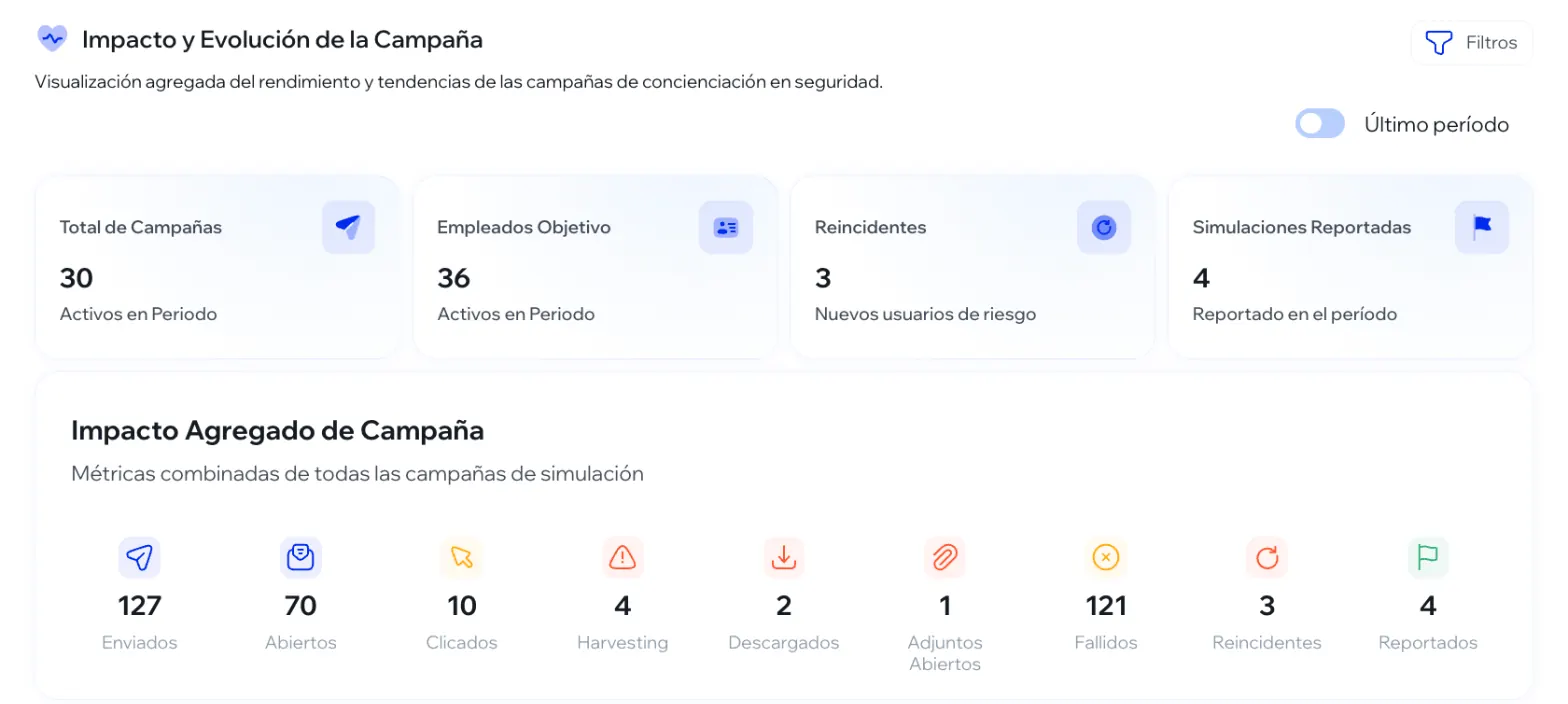
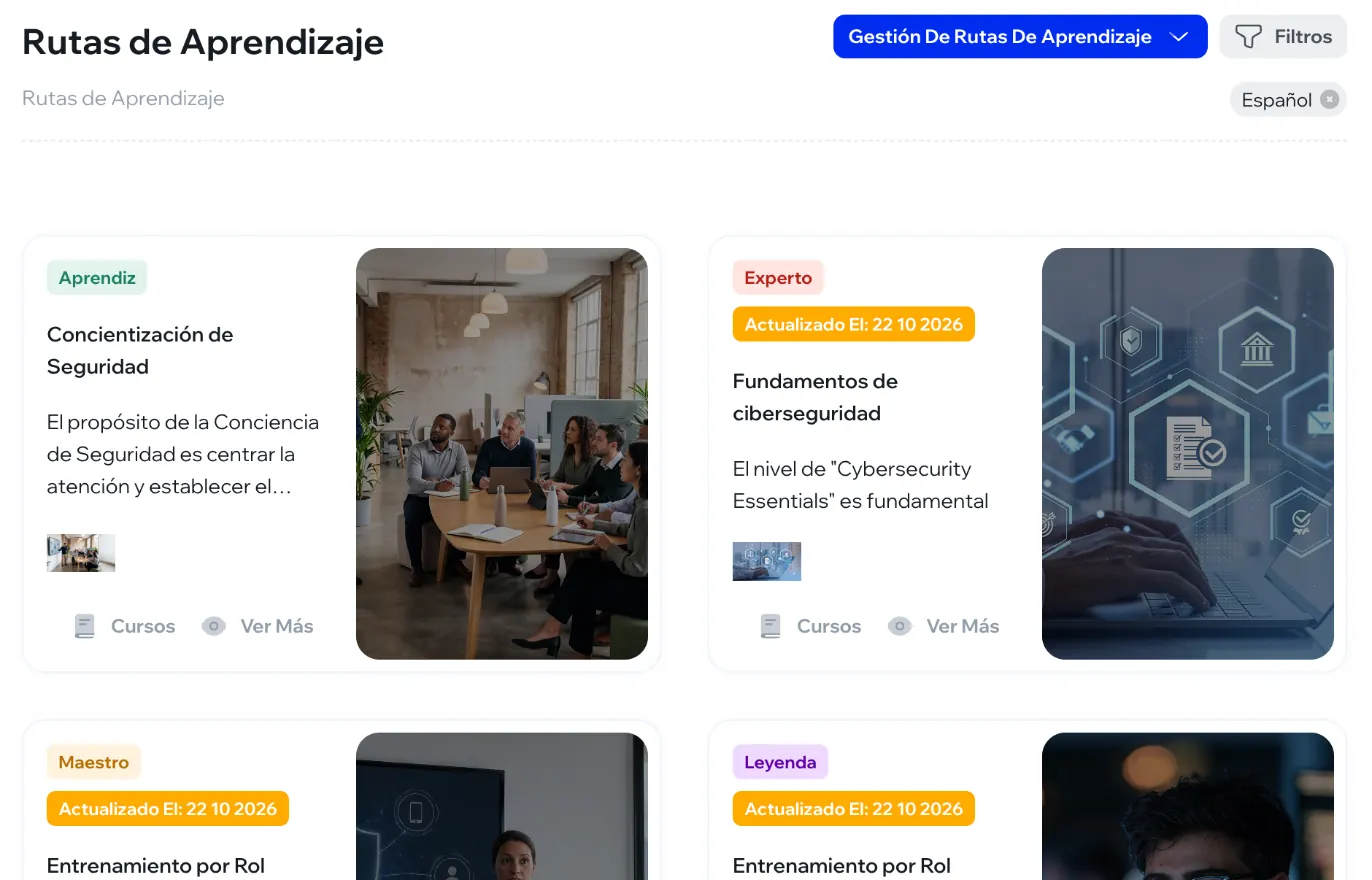
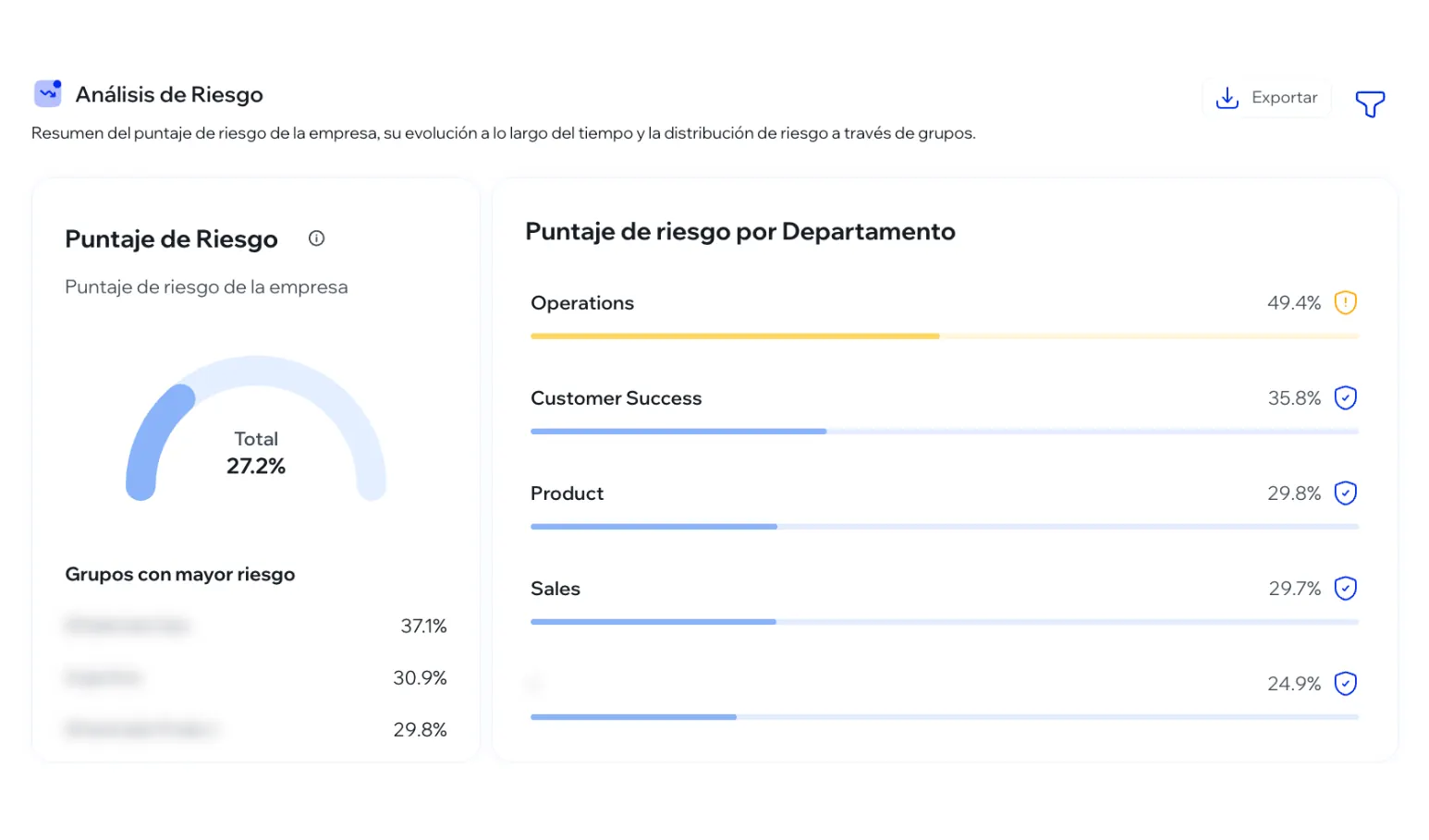
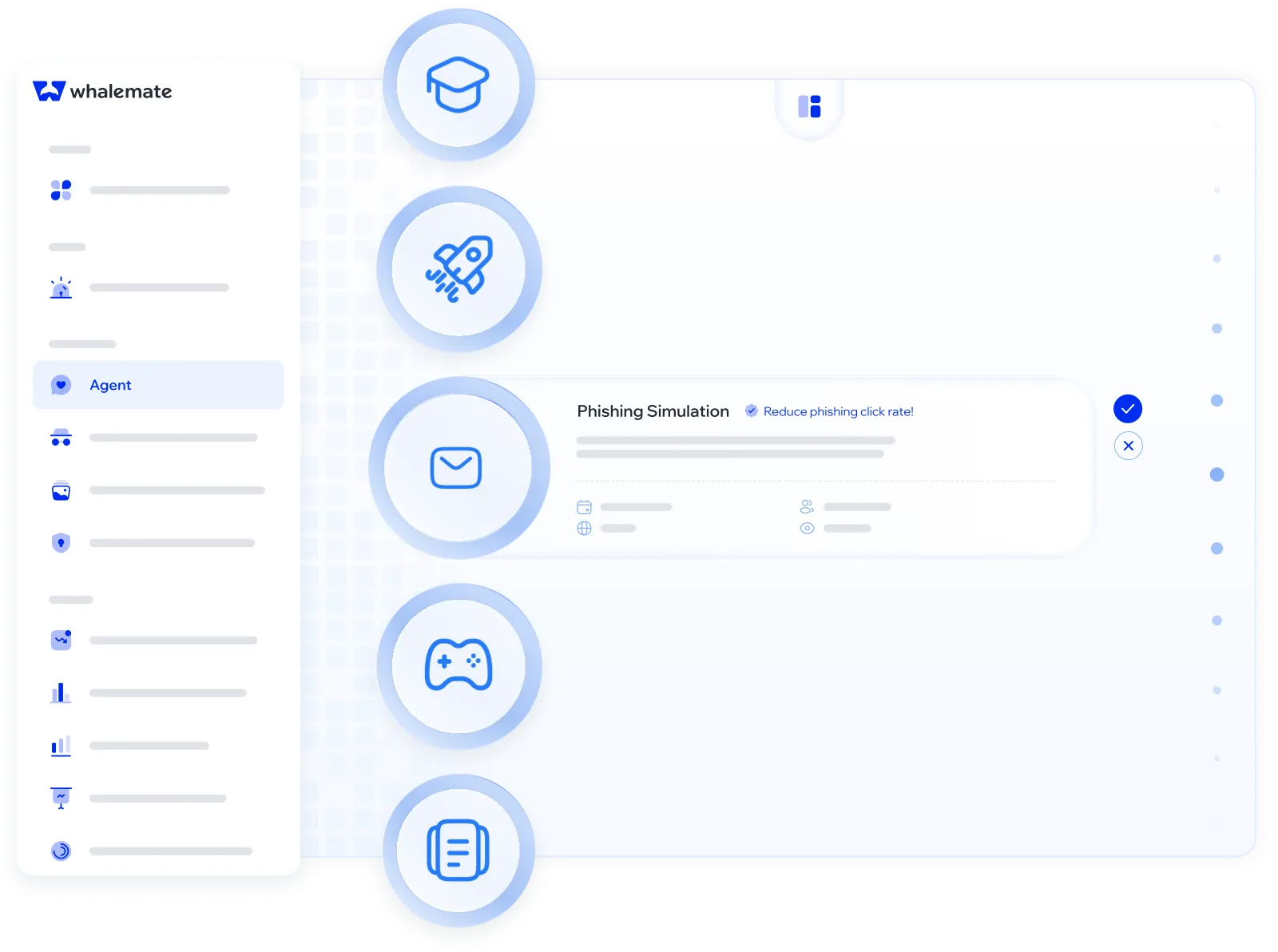
According to Mimecast, 8% of users cause 80% of security incidents. State of Human Risk 2025
Four integrated modules.
Un one program.
Awareness agent
The intelligence that coordinates the program.
Analyzes each user's behavior in real time Adjusts channel, difficulty and frequency of each simulation by profile Adapts training based on observed risk Anticipates vulnerabilities before they escalate Generates actionable recommendations for the security team
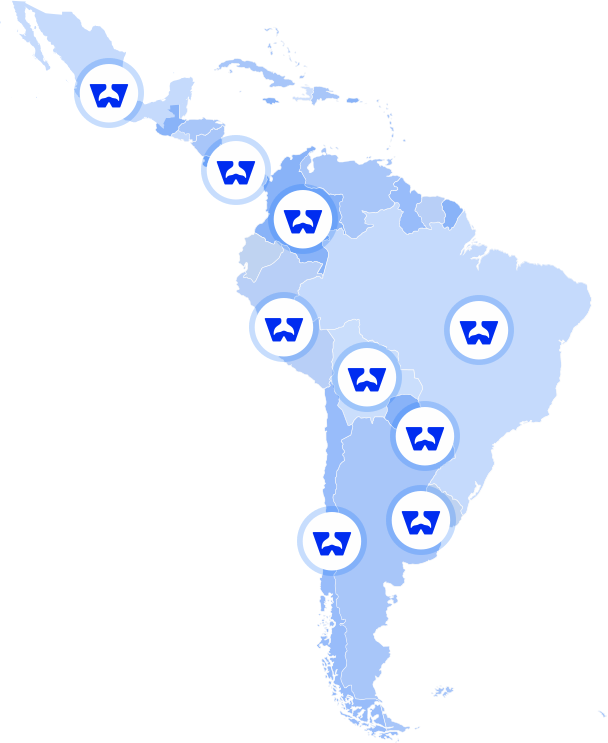
Local depth. Global reach.
Whalemate was born in LATAM and operates in the region with local depth: content, simulations, and scenarios adapted to the region's attack vectors, digital habits, and regulatory frameworks.
Argentina Bolivia Brasil Chile Colombia Paraguay Perú Panamá Costa Rica México Uruguay EEUU
A Human Risk Management program, not four loose products
Simulations, training, analytics and the agent share the roster, data governance and the evidence an auditor asks for. Module detail lives on each product page.
Whalemate does not sell an annual course with a PDF certificate or a standalone phishing simulator. It runs Human Risk Management: simulate the gesture, train when behaviour asks for it, measure who concentrates risk, and leave exportable evidence. Treasury does not get the same lure as a branch. The Agent uses the program’s rules; it does not blast to inflate a cover click rate. What leadership or audit wants to see lives in analytics and the Trust Center, not on an invented “industry average” slide.
The four modules — advanced simulations, adaptive training, human-risk analytics and the awareness agent — are not independent SKUs. They share the roster, the person’s language and the data-use limit. ISO/IEC 27001:2022 is in place. SOC 2 Type 2 is too. No agent on the endpoint. Residency and subprocessors are agreed in the DPA. Published stories live under cases; if a story is not there, we do not tell it here under a pseudonym.
The demo is thirty minutes on your IdP and your context. Price is quoted: Pricing describes Smart, Growth and Enterprise and the service layers. If an RFP asks for “platform + operations + unlimited deepfake,” it is taken apart into product, managed layer and professional services. Smishing, vishing, USB, 2FA and deepfake when they are not native to the plan live under services, not in the campaign builder.
If you are comparing global catalogs such as KnowBe4, the awareness platform alternatives index ranks the contrast by object of management, not by brochure.
What evidence does the program leave for ISO/IEC 27001, PCI DSS and NIST?
Standards don't ask for a course: they ask for a program you can show. What each one requires and what record comes out of Whalemate, which is ISO/IEC 27001:2022 certified. Reviewed on October 28, 2026.
| Standard | What it asks for and what Whalemate leaves | Source |
|---|---|---|
| ISO/IEC 27001:2022, control 6.3 | Information security awareness, education and training relevant to each person's job function. Whalemate records courses, certificates and simulations per person. | ISO |
| PCI DSS v4.0.1, requirement 12.6 | A formal program, reviewed at least every 12 months, with training upon hire and yearly that covers phishing and social engineering. Whalemate exports that record by period. | PCI SSC, SAQ D |
| NIST CSF 2.0, PR.AT | Awareness and training for all personnel (PR.AT-01) and for specialized roles (PR.AT-02). At Whalemate, content is assigned by role. | NIST, February 2024 |
| NIST SP 800-50 Rev. 1 | An organization-wide cybersecurity and privacy learning program, replacing the 2003 guide. Whalemate measures it with the risk score, the report rate and repeat clicks. | NIST, September 2024 |
| 62% | of the breaches analyzed involved a human element, up from 60% the year before. | Verizon DBIR 2026 |
Program capabilities
- Groups
Smart groups
Segmentation from behaviour, not a static org chart. The team that gets the most lures is not always the one with the most risk. Intervene without building lists by hand.
- Roster
Manual groups and risk by group
When the directory is not enough — a project, a batch that must not be simulated — the group is built by hand and risk is read on that cut.
- Brand
Brand setup and custom URL
Visual identity and account URL so the program looks in-house: portal, mail, and assets in the organization’s tone.
Frequently asked questions about the platform
What does the human risk management platform include?
How do advanced simulations work?
What is adaptive training?
What is the risk score and how is it used?
What does the Awareness Agent do?
Does the platform generate reports for compliance and auditing?
How does it integrate with the existing stack?
Updated