
Adaptive security awareness training
Adaptive security awareness training based on each user's risk profile. 120+ courses, paths and gamification; enrollment fires on its own.
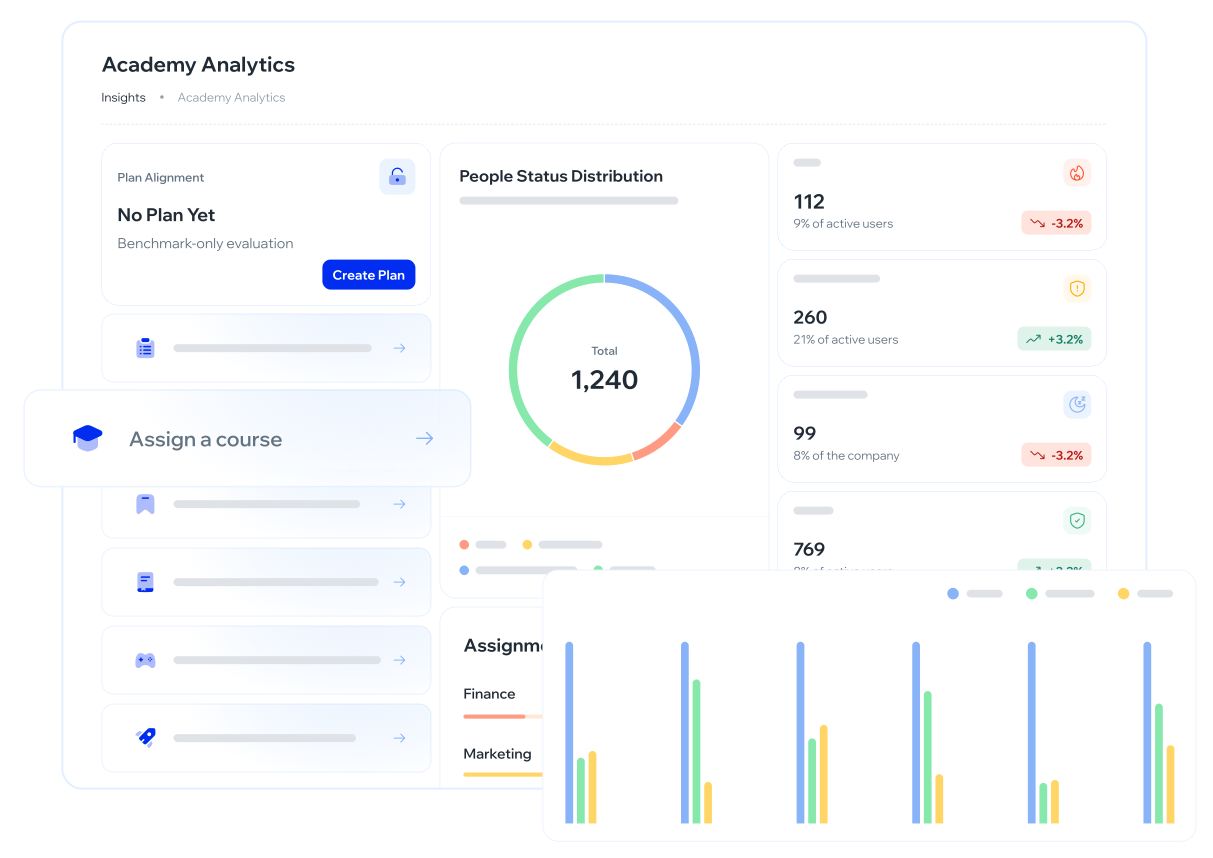
How security awareness training gets assigned
Evaluates each user's history, simulations, courses, and risk patterns.
Selects the most relevant intervention: what content, when, through which channel, and in what format.
High-risk users get immediate reinforcement. Low-risk profiles are not overwhelmed.
A module designed to drive real adoption
industry and language
Content in Spanish, Portuguese and English.
3 to 5 minutes
Brief lessons that integrate into the workflow without disrupting operations.
Content activated automatically based on observed behavior.
Simple experiences to sustain awareness.
certificates
Evidence of progress for security, compliance and leadership.
compatibility
Integration with existing training processes.
industry and language
Content in Spanish, Portuguese and English.
3 to 5 minutes
Brief lessons that integrate into the workflow without disrupting operations.
Content activated automatically based on observed behavior.
Simple experiences to sustain awareness.
certificates
Evidence of progress for security, compliance and leadership.
compatibility
Integration with existing training processes.
industry and language
Content in Spanish, Portuguese and English.
3 to 5 minutes
Brief lessons that integrate into the workflow without disrupting operations.
Content activated automatically based on observed behavior.
Simple experiences to sustain awareness.
certificates
Evidence of progress for security, compliance and leadership.
compatibility
Integration with existing training processes.
Behavior and evidence for Compliance
Whalemate organizes evidence, reports, and traceable controls to demonstrate program progress to internal audits and regulatory frameworks.
See use case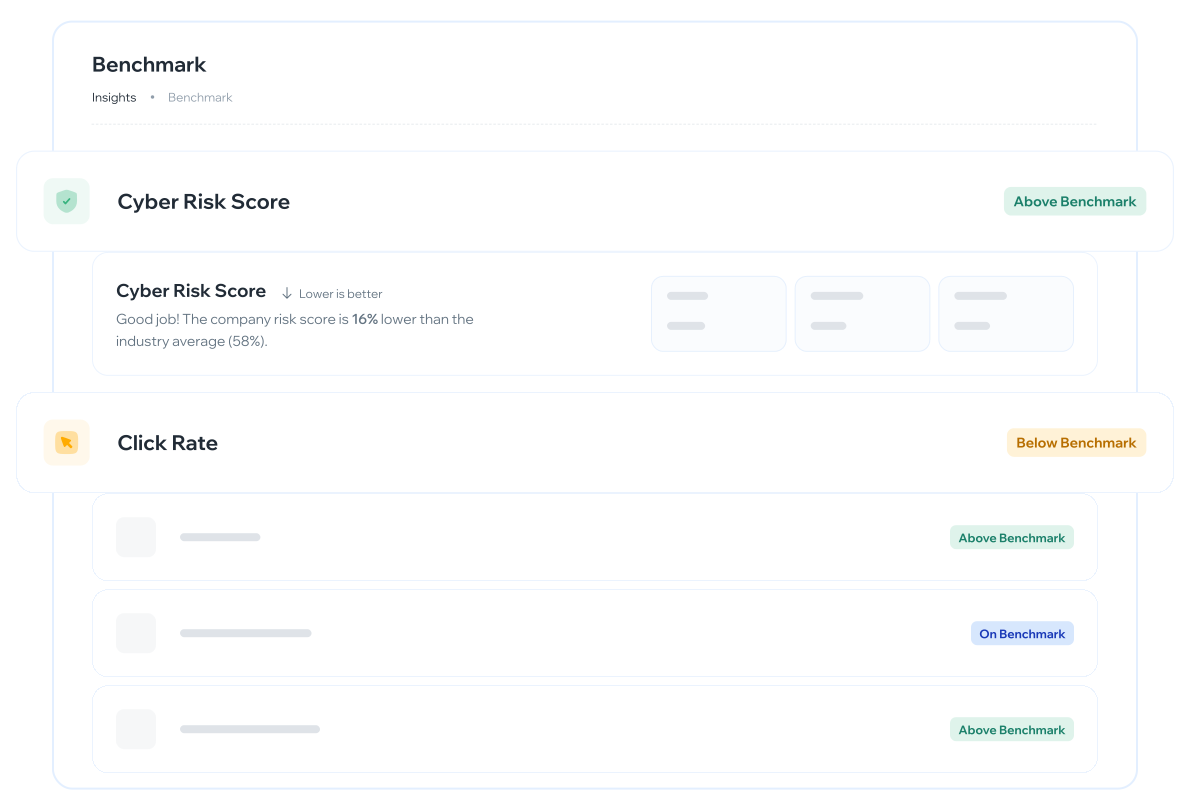
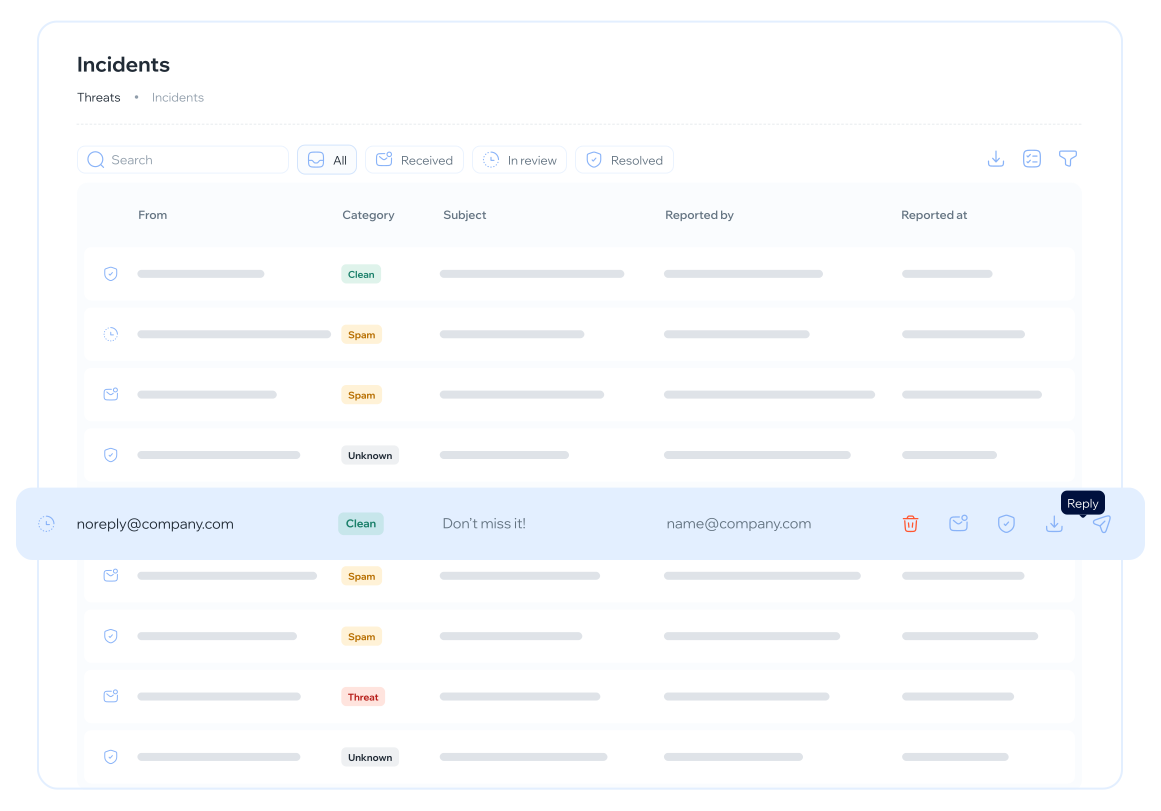
Designed to drive real adoption
Whalemate supports each user from day one through post-simulation reinforcement, with training adapted to each team's maturity level. Compatible with LMS and available in multiple languages for regional and global teams.
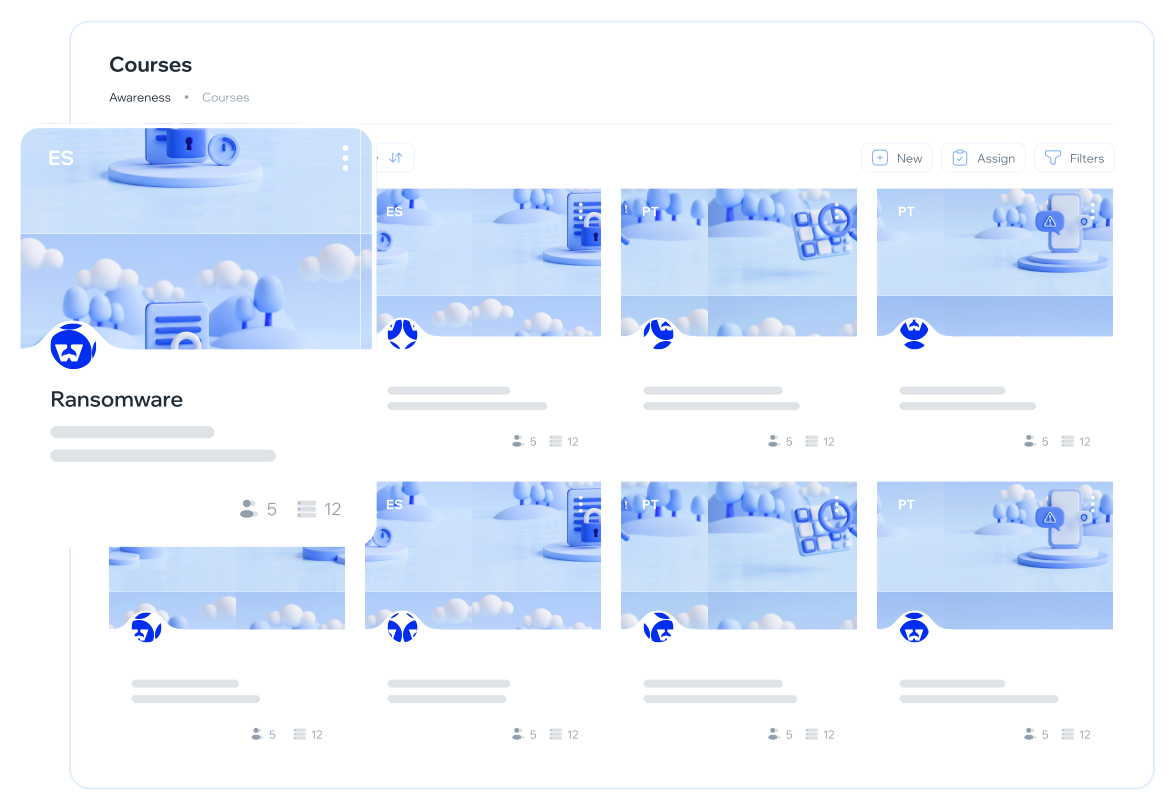
How this module is used
Program capabilities
Learning paths
The admin builds an order of courses. Each person walks that path in the portal — not a loose catalog. Security and L&D stop negotiating “the one-hour course” for the whole roster.
Employee portal
Where the course is taken, a policy is accepted, and assignments are visible. It is not a public campus: it is where the program is done, in the language of the person taking it.
Quizzes and pass percentage
Each course closes with a quiz. The score leaves a state — and a certificate, if the program needs one. Training evidence, not a trivia habit.
PDF certificates
Proof that person finished that course. Auditors usually ask for this and the policy-acceptance record. It does not replace a simulation or a risk index.
Academy analytics
Coverage, progress, and pass rates. Academy measures whether training was taken. The Human Risk Score — who concentrates risk — lives in human-risk analytics.
Automatic enrollment after a fail
Whoever fails a simulation enters the course for that error, not the month’s pack. The simulation fires; training assigns. The habit is corrected while it is still fresh.
Security awareness training that behavior decides
This is not the annual LMS course. It is a module for security and L&D: what each person learns, when, and in what format — based on what they did, not on the calendar month.
Not the anniversary course
A corporate LMS sends the same module to the whole roster on the policy anniversary. That produces a certificate. It does not produce a change in the person who just fell for a payroll lure. Adaptive training reads simulations, courses already taken, and repeat patterns. High risk gets immediate reinforcement, contextualized to the error. Low risk is not flooded with a video that no longer helps. Security stops negotiating “the one-hour course” with People. L&D stops owning a catalog nobody finishes.
Two owners, one trigger
The module is built for two owners who often do not talk. Security brings threat criterion and the post-simulation moment. L&D brings the training frame, language, and coexistence with the LMS when needed. Content lives in Spanish, Portuguese, and English, by role and industry. Lessons last minutes, not a full day. There are trivias and automatic reinforcement. There are certificates when evidence is needed. None of that turns the module into the annual e-learning in disguise: the trigger is behavior.
What this module is not
What this module is not matters as much as what it is. It is not a campus of a hundred courses to “close the year.” It is not a single digital-hygiene video. It is not a replacement for the legal induction People still has to give. It is the layer that turns a click or a report into an intervention. If all you need is SCORM for the LMS, there is compatibility. If what you need is for the program to stop being an event, this is the module.
Content, timing, and format are not chosen by hand
Three levers. The team sets rules. The system applies them per person.
Content follows the error
If the person fell for a token lure, reinforcement talks about tokens — not “ten password tips.” The catalog exists by role, industry, and language. Assignment is not a monthly pack that is the same…
Timing follows the signal
High risk: reinforcement close to the event, while the error is still fresh. Low risk: do not interrupt the week with an irrelevant course. Onboarding can trigger a short path. The calendar stops…
Format follows context
Minutes, not a full day. Trivia when the habit needs to be held. A short course when the topic asks for it. A certificate when compliance asks for it. LMS compatibility when the training process…
Questions about adaptive training
Turn training into continuous learning
Book a demo and see how Whalemate automatically determines what each person learns, when and in what format.