
Managed security awareness service: the analyst operates the program with you
A managed security awareness service is not a license someone internal has to learn on Fridays. It is an account analyst who builds the annual plan, runs courses and campaigns, and sits in follow-up. Your security team sets the criterion and authorizes. It does not add a seat to operate awareness.
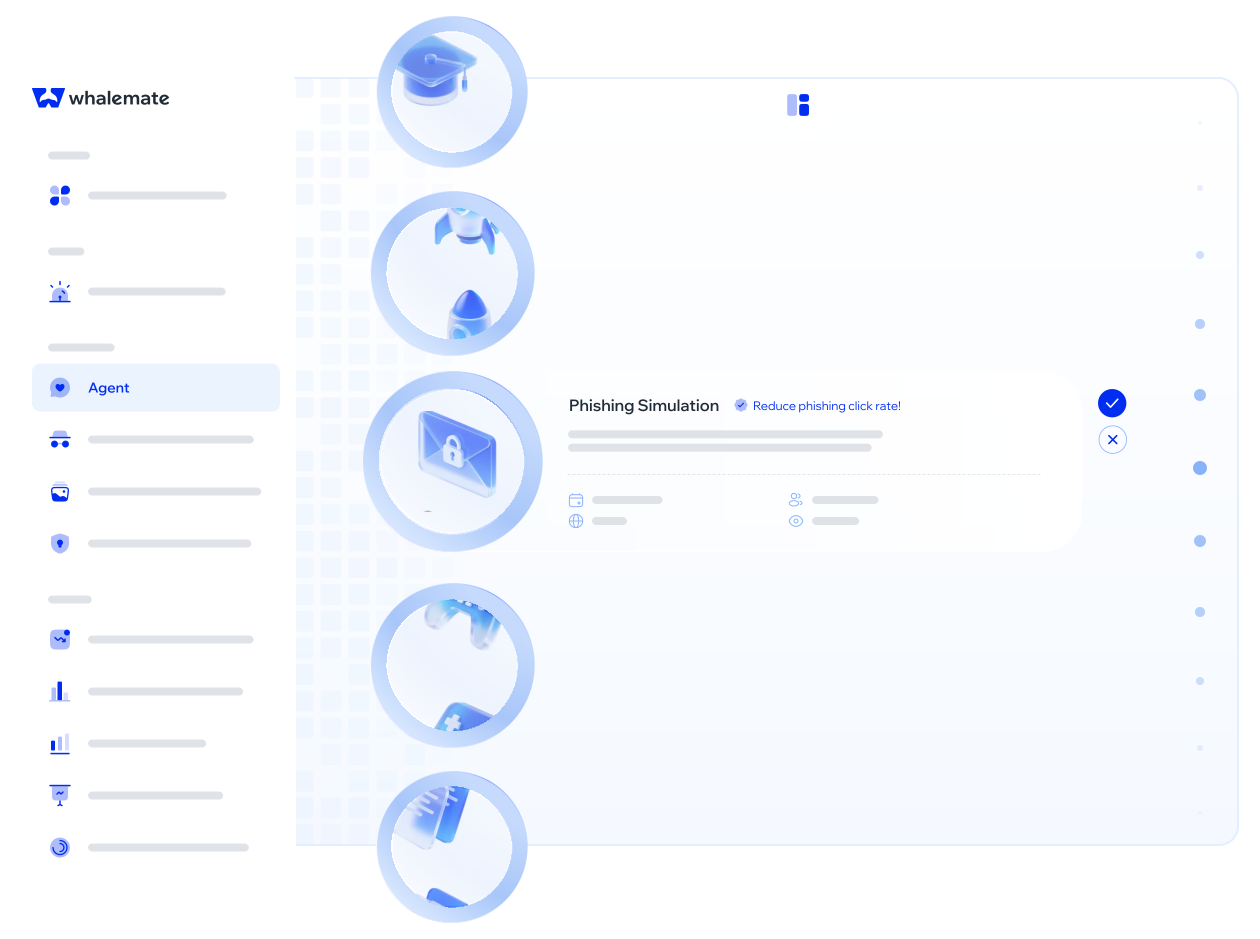
A year of managed service, month by month
A contact is named, the directory is connected, and you write down what Whalemate can decide alone. If you authorize template and date, the analyst notifies before each campaign. If you prefer to validate every send, that is the rule. Without this agreement the service becomes an endless chat or a send without notice.
The analyst proposes the year: cycles, courses, reviews, and the plan quotas. You validate priorities, countries, languages, and off-limit windows. The plan is written down. The service is judged against that document, not against a loose March send.
When there is authorization to pick template and date, Whalemate chooses, notifies the contact, and sends. Notice is not a permission hidden in a footer: it is the agreed email or channel, with time to stop if there is an incident, a close, or a roster change. If there is no authorization, the send waits for your ok.
A roster update that did not come through the directory —a merger, a new country, a cohort that must not be simulated— needs explicit notice. A new course, outside what was already planned, does too. The analyst does not guess a People exception or invent a module because a leader asked in a hallway.
What the analyst does: platform, service and content
Platform
The analyst works on the product you already bought, not a parallel console. They use the roster the directory leaves in read-only, the catalog and the plan quota, and they leave evidence in native…
Service
They build the annual awareness plan, operate courses and campaigns, and hold the periodic follow-up meeting —monthly in the plans table, confirmed at kickoff—. They arrive with a proposal: what to…
Content
When the account authorizes Whalemate to pick template and date, the analyst chooses from the catalog —or from the custom quota if the plan has one—, notifies the contact, and sends. A new course or…
If security cannot add a campaign operator
A managed security awareness service is for organizations that want a
The symptom is clear: there is an IdP, a roster, an owner who can decide, and no hours to pick a template, set a date, chase a course, and build follow-up. Anyone who sells only the platform and…
It also fits teams that already had awareness on autopilot and got
The managed model splits the work. Whalemate proposes the annual plan, operates what is authorized, and notifies the contact before sending. The client updates the roster, requests a new course, and…
It is not the service if what you need is someone internal to run the
It is also not a project with an end date: it is recurrence tied to Smart, Growth, or Enterprise. The analyst operates inside that tier’s quota. If the year asks for custom, branded work, or an…
What Whalemate does not decide for you
What the analyst does: platform, service and content
Platform Service Content
What Whalemate does not decide for you
Whalemate does not update the roster blindly or launch a course outside the plan without explicit notice. It does not use the index to discipline. It does not… It is also not self-serve with a support chat. The difference is a closed relationship: an analyst who knows the roster, a written plan, and a contact who gets…
When content is operated, not abandoned
Banco del Sol had already bought awareness and was still measuring attendance. The content did not feel local and no one internal had the month to operate the calendar. When the program gained an owner at Whalemate…
Launch assistant
The analyst supports program launch. The step-by-step how-to lives in customer documentation.
Questions about the managed security awareness service
Do you want a managed security awareness service, not a license alone?
The conversation agrees the contact, the authorization model, and the tier —Smart, Growth, or Enterprise— the analyst will operate on.