
Phishing simulation for companies
Native email phishing and QRishing, tailored to each risk profile. Each fail triggers training. Smishing and vishing run as a professional service.
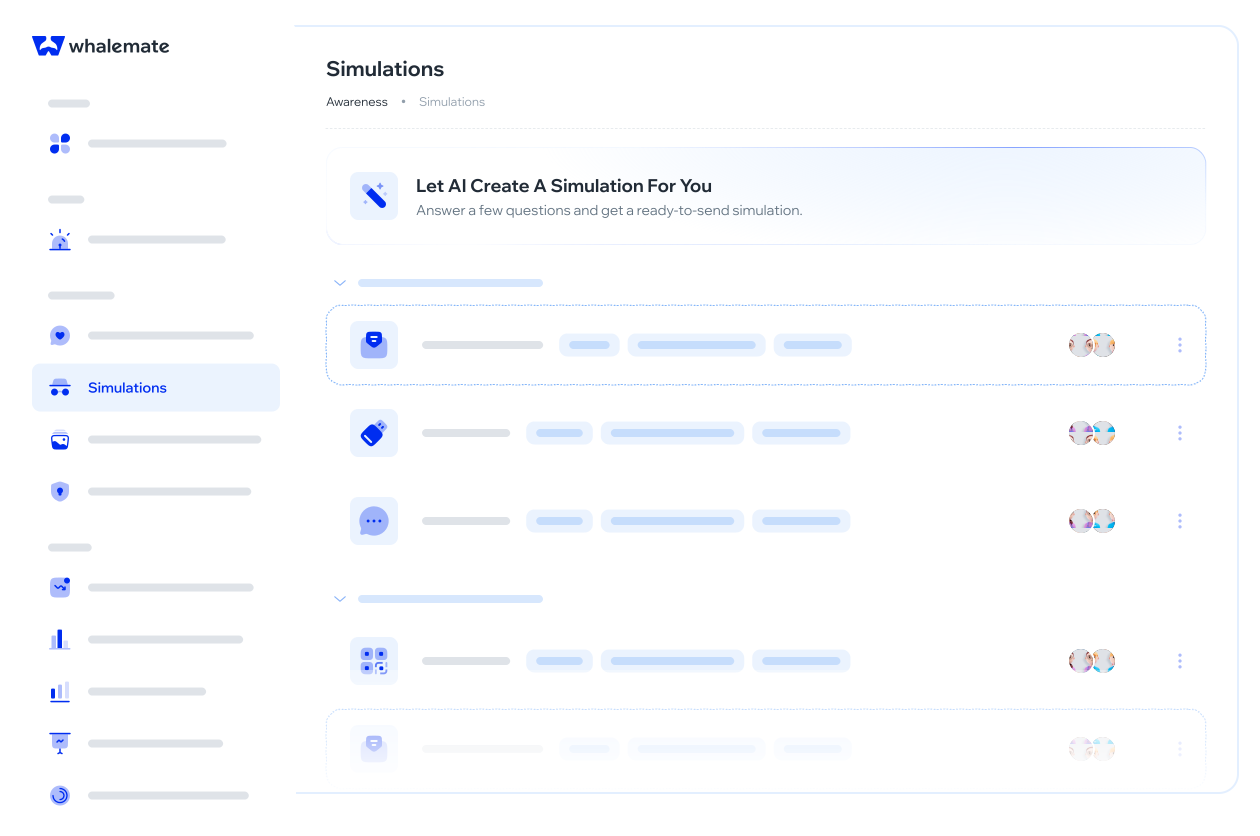
How a phishing simulation works
The Agent evaluates each user's history and behavior to determine their level of exposure.
Launches the right campaign for that profile: channel, scenario, and difficulty adjusted individually.
If the user falls for it, activates immediate training contextualized to the specific error made.
The mistake becomes a lesson, right there
Anyone who falls for a simulation doesn't get a scolding: they get a 3-minute micro-lesson that explains the trick while they still remember it.
Can you find the 5 signals?
This is a real email used in our simulations. Hover the marked areas and learn to read phishing the way an analyst does.
Dear team member,
We found an inconsistency in your August payslip. To avoid delays in the transfer, verify your bank details within the next 2 hours
Access the portal from this link: payroll-portal.company-online.net
Regards,
Human Resource Department
Five signals a phishing email usually carries together
The exercise is recognising the pattern. We do not publish a campaign rate.
What is native and what runs as a service
phishing
Native email campaigns, adjusted to each user's risk profile, with difficulty based on history.
Native QR-code simulations. The QR jumps to the phone; the mail filter does not see it as a link.
modalities
Click-only, credential capture and ransomware by attachment. Three depths of the same email channel, not three products.
services
Smishing, vishing, USB drop, 2FA attacks and deepfake are not builder buttons. They run as a service, with scope and a report.
phishing
Native email campaigns, adjusted to each user's risk profile, with difficulty based on history.
Native QR-code simulations. The QR jumps to the phone; the mail filter does not see it as a link.
modalities
Click-only, credential capture and ransomware by attachment. Three depths of the same email channel, not three products.
services
Smishing, vishing, USB drop, 2FA attacks and deepfake are not builder buttons. They run as a service, with scope and a report.
phishing
Native email campaigns, adjusted to each user's risk profile, with difficulty based on history.
Native QR-code simulations. The QR jumps to the phone; the mail filter does not see it as a link.
modalities
Click-only, credential capture and ransomware by attachment. Three depths of the same email channel, not three products.
services
Smishing, vishing, USB drop, 2FA attacks and deepfake are not builder buttons. They run as a service, with scope and a report.
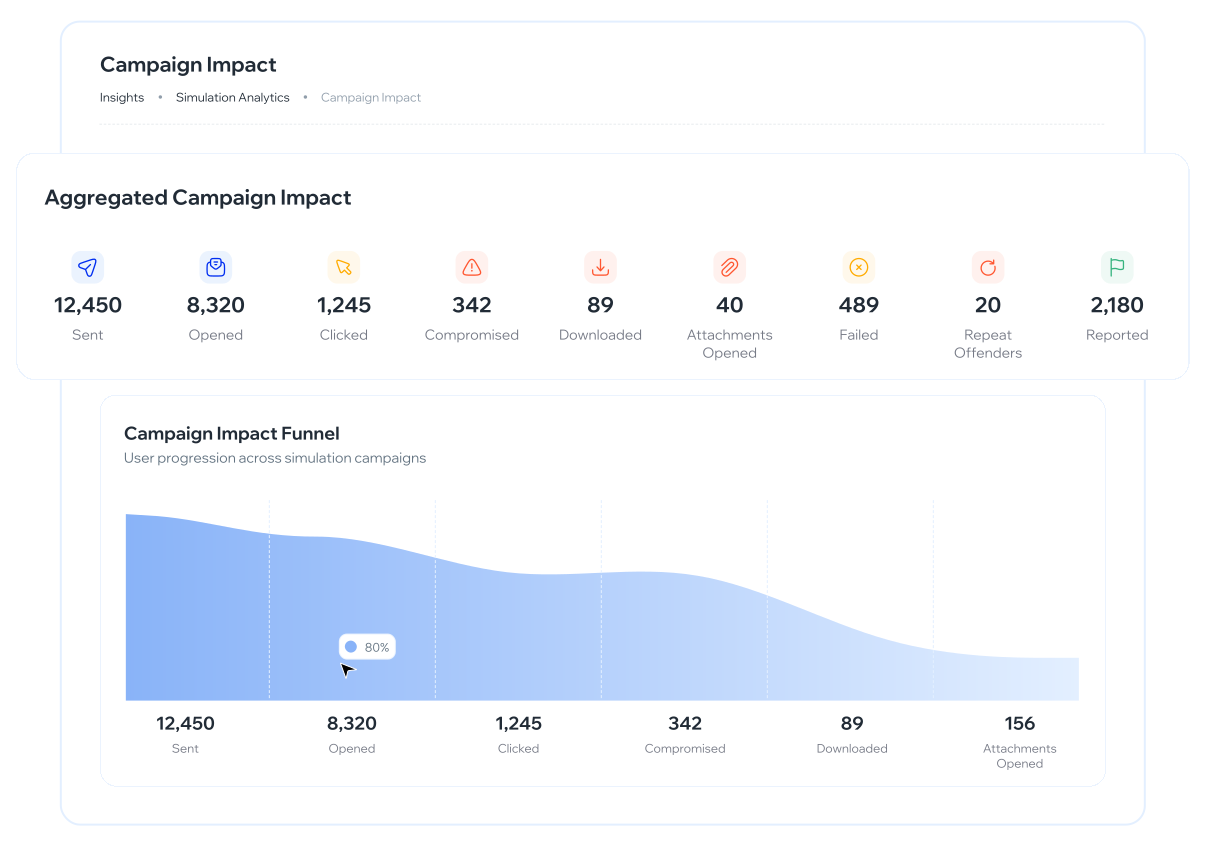
Actionable visibility, not just click rate
Every campaign generates behavioral data to understand real exposure, prioritize interventions, and demonstrate evolution.
Click rate by user, team and organization Report rate: who detected and reported the threat before falling Evolution: how the risk profile improves over time
Simulations for the real world
Executive fraud, credential theft, fake vendors, compromised access. Whalemate replicates the most frequent attack vectors with templates by industry, role, and operational context — designed to replicate what your teams face day to day.
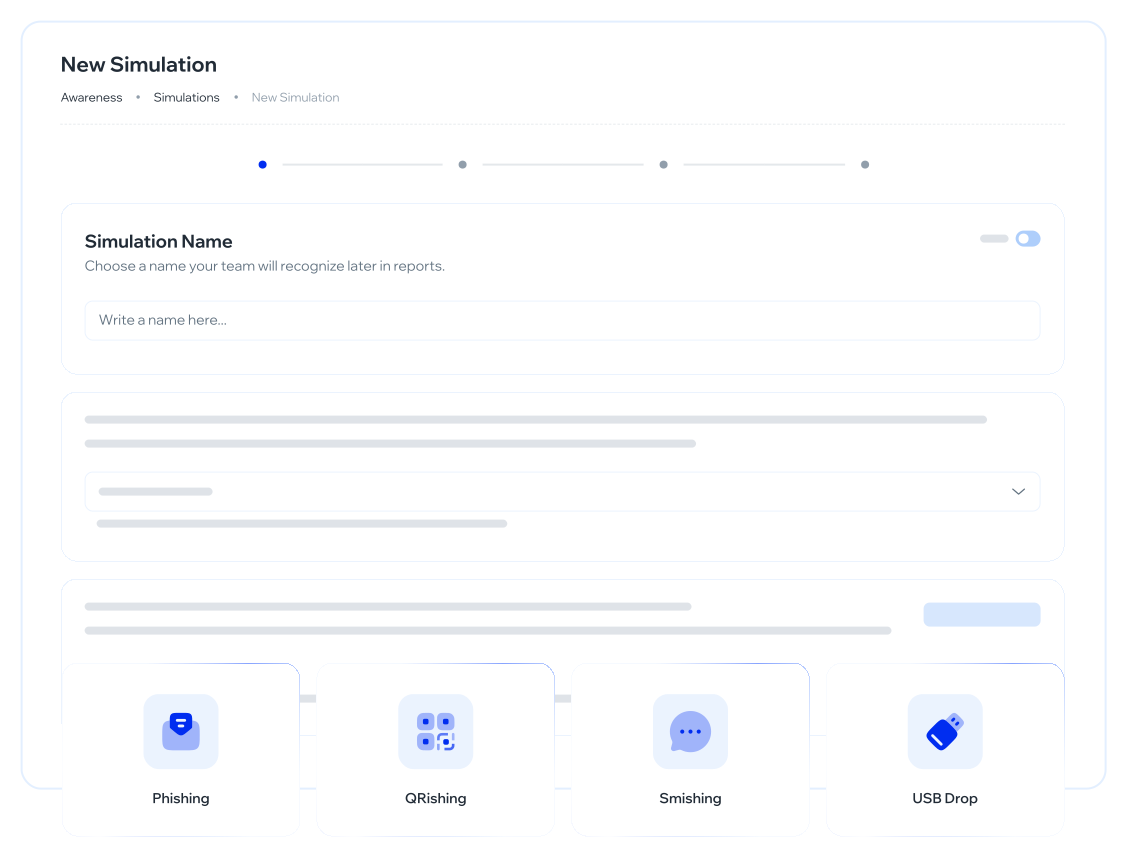
How this module is used
Program capabilities
Click-only, credentials and ransomware
Three modes of the same campaign: measure the click, the hand-over of data, or the ransomware gesture. The library classifies them. Not three separate products.
Post-fail landing
The screen whoever falls sees. It measures the gesture — open, hand over, execute — without being a customer microsite or a form that asks for a real secret.
Launch calendar
When each campaign goes out. The annual plan lives with the analyst; here you see the cadence so the roster is not flooded and months are not left silent.
Automatic enrollment after a fail
Whoever falls enters the course for that error. The simulation fires; training assigns. Reinforcement does not wait for the quarterly pack.
Phishing simulation for companies: email, QRishing and three modes
Campaigns adapt to the profile, not to a monthly blast. We do not publish click rates or industry averages. We publish the criterion: channel, difficulty, and what happens after the error.
A phishing simulation that works measures behavior; it does not produce a ranking for a photo. The payroll email and the store QR exist because the real attack uses those native channels. The Agent picks difficulty and frequency from history. Treasury and the sales floor do not get the same lure on the same Tuesday. If the person falls for it, the cycle continues in contextual training. If they do not, the bar can rise. The security team sets rules. It stops slicing lists.
Adaptive phishing covers email. QRishing covers the scan gesture — not a PDF about codes. Three modes on the same email channel: click-only, credential capture and ransomware by attachment. Smishing, vishing, USB drop, 2FA attacks and deepfake run as professional services, not as builder buttons. Here we do not sell a pack with an improvement percentage. We declare what is native and what is measured: exposure and habit, not a loose rate.
What we do not do matters as much as the catalog. We do not publish customer click rates or a “LATAM average.” We do not use the result for a file. We do not install an endpoint agent to “see the click.” The simulation is a controlled exercise. The report says what happened in that campaign. The index accumulates the signal. Leadership sees evolution, not a hall of shame. If someone quotes you a program with a click rate printed on the cover, ask where the number came from.
Questions about phishing simulation
Measure your response to real threats
Book a demo and see how Whalemate designs simulations adapted to each user's risk profile.