
Alternatives to Smartfense: when completion rate no longer manages risk

Smartfense records training. Anyone searching for alternatives to Smartfense already suspects that a percentage of finished courses is not a behaviour program. The gap is not “we lack a library”: it is that the record does not intervene.

Why people search

Why a completion rate no longer closes a conduct audit

You look for an alternative when the compliance report is green and

Completion rate is an honest number for a checkbox: this many people finished the module. It is not an honest number for a board that asks who is still exposed and what was done with that person…

In LATAM, Smartfense is known

The ceiling is not “there are no courses in Spanish”. It is that the system assigns training and does not act on behaviour. There is no per-employee index that feeds groups, interventions and a risk…

The second symptom is operational

Campaigns are built by hand. Groups are treated as fixed lists. There is no smishing in the product. There is no report-and-follow-up inbox as part of the cycle. The administrator remains the engine…

The third is editorial

Creating your own content —the bank’s tone, the insurer’s piece— is not the centre of the product. The library of materials and newsletters is the ground where Smartfense often wins. We say so here…

The referent

In LATAM, awareness is operated — not left on a campus

Smartfense is an awareness and training platform that many

Its place is not KnowBe4’s (global catalog referent) and not a gamification studio’s. It is a vendor that covers the rite of assigning courses, reporting completion and holding a program that looks…

That rite is enough when the only buyer is compliance and the only

It stops being enough when security wants a cycle: simulate, measure the person, intervene, simulate again. Human Risk Management is not a rebrand of “we sent the course”. It is a different object of…

We do not claim Smartfense “has no email simulations”

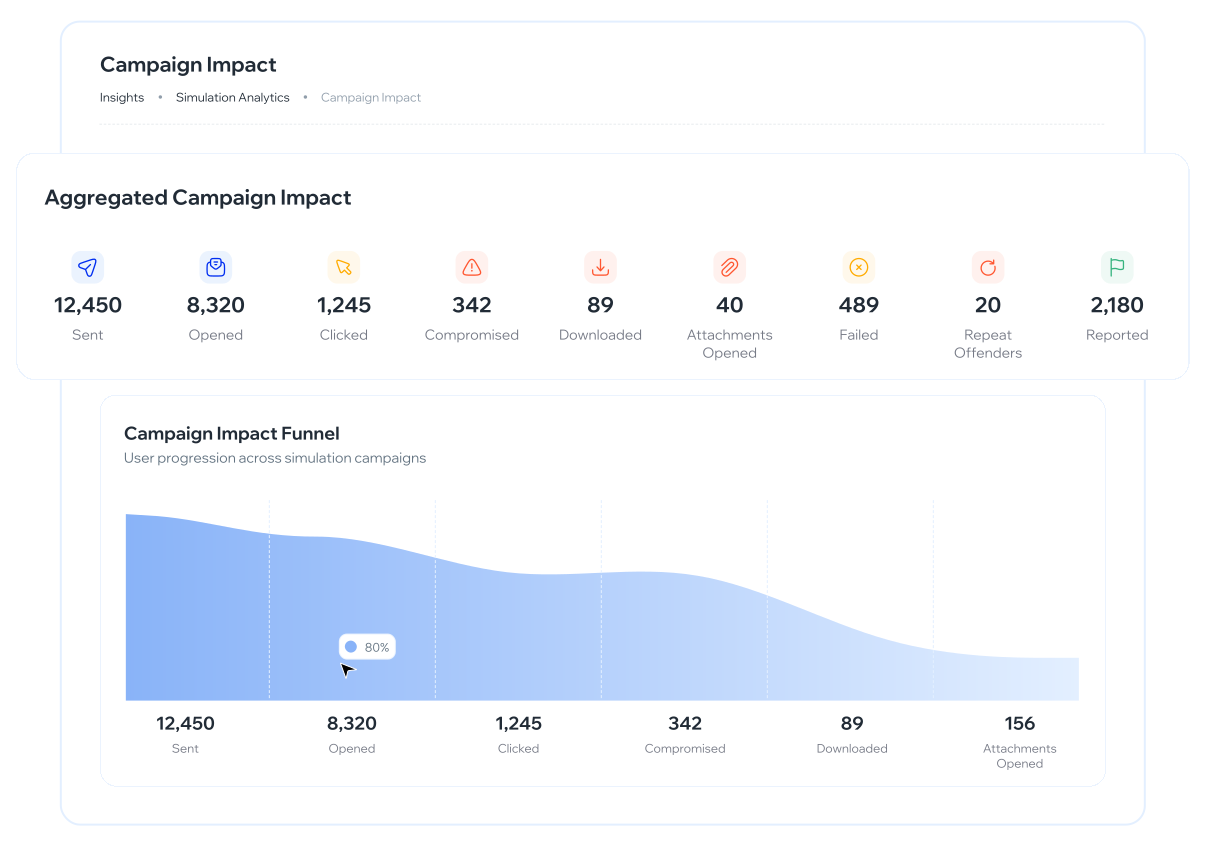
The contrast that matters is different: without a score that moves the program, the simulation is an event. The event is reported. The profile’s treatment does not change. Whalemate builds the Human…

We also do not claim “they have no learning paths”

The gap is whether the path is written from that person’s risk or from a curriculum someone built once. A static path is an LMS. A path that moves with the index is a human-risk program.

Channels: email and QRishing are native in Whalemate

Smishing is not in Smartfense on the product evaluation we use, and in Whalemate it is not a builder button either —it runs as a professional service. The difference is not “we have SMS and they do…

Criteria

Risk-management criteria versus a training record

Five axes. None of them is “who has more newsletters”. That one, they usually win.

Completion or Human Risk Score

Whalemate. The index lives on the employee. It groups, prioritises and informs the board without being a punishment ranking.

Smartfense. The number that closes the quarter is how many finished the course. It is a valid training record. It is not a human-risk index.
What happens after a fail

Whalemate. You intervene with contextual content for that fail. You do not resend the same onboarding module.

Smartfense. Assigning training is the gesture. Acting on behaviour —changing how that profile is treated— is not the centre of the product we see in evaluation.

Content with the organisation’s face

Whalemate. Your own courses and pieces enter the cycle. Ongoing branded production is a professional service, not a magic assumption of the catalog.

Smartfense. Creating your own content is not the strength. The library of materials and newsletters is: that is where they often win the comparison.

Hand-built campaigns or an agent

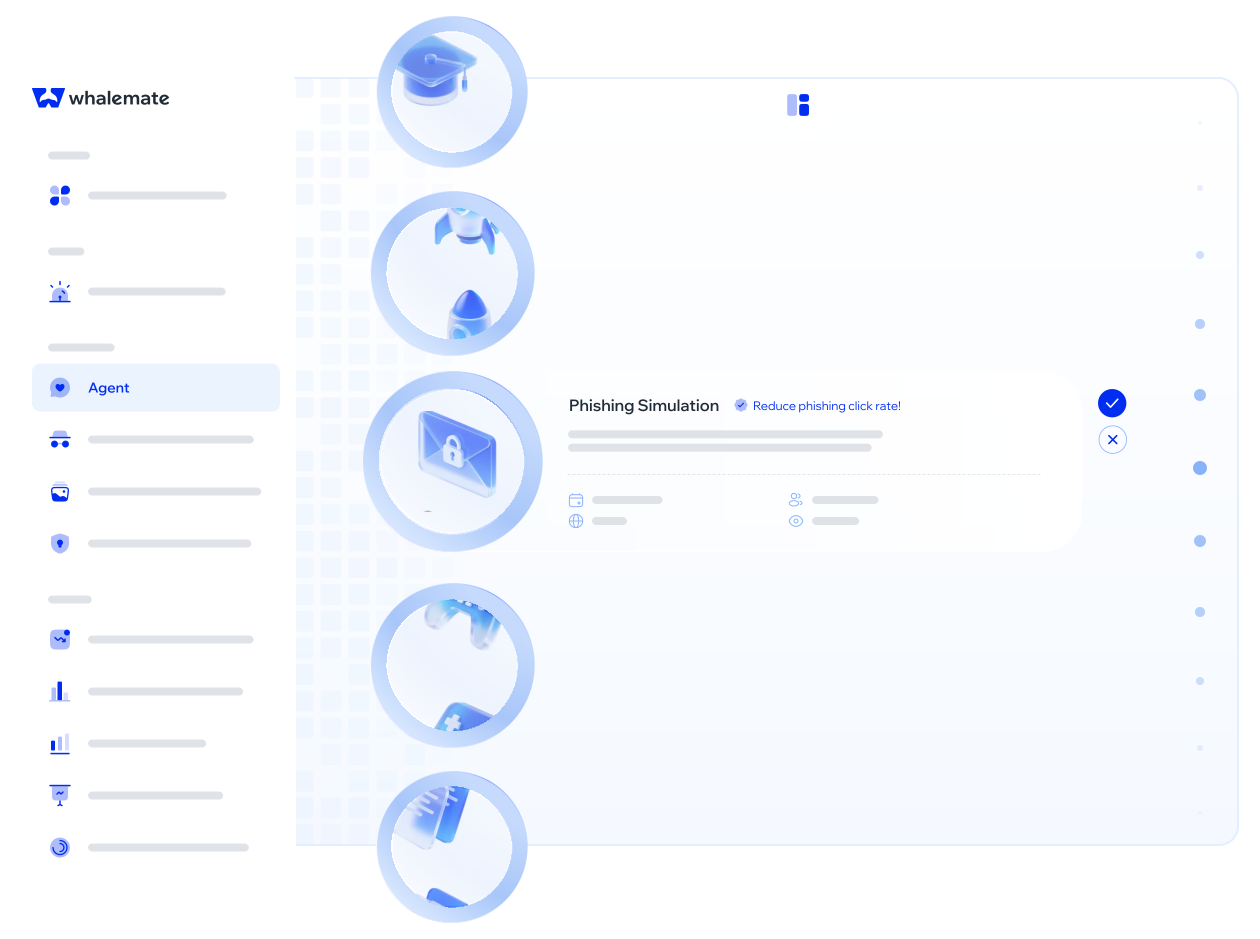
Whalemate. The agent holds the plan when the score moves. The analyst is not the weekly engine of “pick a lure”.

Smartfense. The administrator builds. If they do not build, the program waits. There is no planning agent that replaces that ritual.

Incidents in the same product

Whalemate. The report button and follow-up inbox live in the awareness cycle.

Smartfense. No native report-and-follow-up in the sense of a program incident inbox. The reporting gesture sits outside or in another tool.

Evidence

The case of someone who already left Smartfense

NaranjaX came from Smartfense. The published case is not a “we changed vendors” release. It is the story of a program that needed another density of operations and of human-risk evidence. It is read on the case page…

The case of someone who already left Smartfense
Where they still win

Where Smartfense remains a reasonable choice

Smartfense wins when the requested deliverable is a broader library of

It wins when the buyer is training or internal communications and not a CISO who wants an index. It wins when the program will not simulate in earnest and only needs evidence that “content was sent”.

It also wins on regional familiarity

That friction is real. Whalemate does not erase it with an H1.

If what you need is to hold a rite of courses and bulletins, and nobody

Whalemate enters the day that rite no longer explains the incidents.

Fit

Which program profiles Smartfense is enough for

Fit is decided by the internal buyer, not by a logo on a slide.

Enough if compliance only wants a spreadsheet

If the auditor wants to see who finished the course and nobody will ask for a per-person index, the training record closes. You do not need an HRM.

Enough if the centre is the bulletin

If internal communications lives on newsletters and materials, and security does not run simulations with judgment, the library weighs more than the agent.

Not enough if clicks already repeat

The same profile that fails and gets the same course again is the symptom. There the completion is lying with a true number.

Not enough if nobody builds campaigns

A product that waits for the administrator, with no agent, rots in empty calendars. The ceiling is operations, not brand.

The change

What you lose and what you gain by moving to a per-person index

You gain an object of management

You lose the comfort of reporting only completion. The board will ask about profiles, not classroom percentages. You have to be willing to have that conversation.

You gain an operator (agent + analyst depending on the plan)

You lose the illusion that “the platform runs itself” if nobody configured groups or deliverability. Kickoff still exists.

You gain channel honesty

You do not gain a native smishing builder. If the reason for leaving Smartfense is “we want SMS on a button”, the smishing professional service is the answer, not an invented feature.

In the demo

What you will see in a demo

In thirty minutes you see the per-person index and what gets assigned

Without pretending we win the newsletter library.

A high completion rate can be true and still useless

True: people finished the module. Useless: the module was not the intervention that fail asked for, or the person who exposes the most sits in the green percentage because they took the onboarding…

Whalemate still has courses, trivia and a gallery

The Human Risk Score does not replace evidence an auditor who asks for a standards course. It coexists. The change is that completion stops being the only number that explains the program.

In the cycle

The contrast is the index, not more titles

The contrast with Smartfense is not won by showing more courses. It is won by showing the index. In the demo you see how human risk is measured per person and what is done with that number.

The contrast is the index, not more titles
Questions

Questions about alternatives to Smartfense

Is Smartfense useless for awareness?
It works to record training and hold a program of courses and materials. It stops being enough when the object of management is behaviour and per-person risk. Those are not the same thing.
Does Whalemate have a larger library than Smartfense?
We do not claim that. They often win on materials and newsletters. We publish a localized catalog and 90 gallery pieces. The argument is not library volume.
Do you have smishing and Smartfense does not?
Smartfense, on the evaluation we use, does not cover smishing. Whalemate does not offer it as a native button either: it is a professional service. We do not sell that difference as a fake product check.
Is there a customer who came from Smartfense?
NaranjaX. The case is published with its own story. We do not use it as a universal verdict against the vendor.
Can I keep measuring completion if I switch?
Yes. Courses still exist and an auditor will ask for them. The change is that completion stops being the only number that explains the program.
Is this an attack on a regional competitor?
No. It is a fit filter. If your internal buyer is training and the deliverable is the bulletin, Smartfense can be simpler. If the buyer is risk, the object has changed.

If completion green no longer explains the incidents

In the demo we show the per-person index and what gets assigned after a fail. Without pretending we win the newsletter library.

We compare program approaches. We do not publish third-party prices, do not replace an RFP, and do not claim capabilities the product does not have on this site. Public sources reviewed in August 2026. Third-party capabilities may have changed.