
How NaranjaX scaled human risk management
One of Argentina's largest fintechs found in Whalemate the personalization and scale to make human risk a real part of their teams' daily work.

A program without the personalization they needed
With over 3,000 employees and a mature tech culture, NaranjaX needed to move from generic campaigns to a program that measured and reduced real human risk for each team. Smartfense didn't offer that personalization.
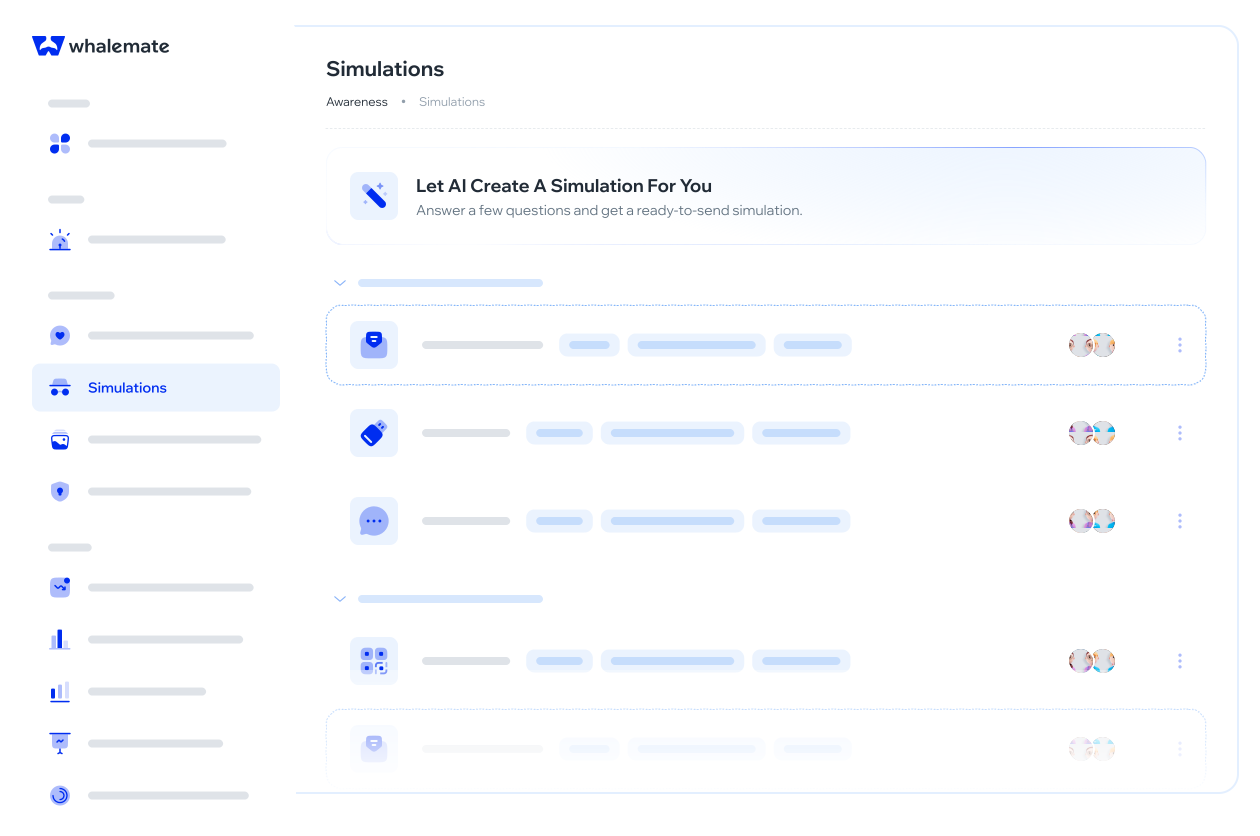
Real personalization, not generic training
The ability to adapt simulations and content to each employee's risk profile was the decisive factor. Whalemate turned cybersecurity into something relevant for every area, not a massive obligation.
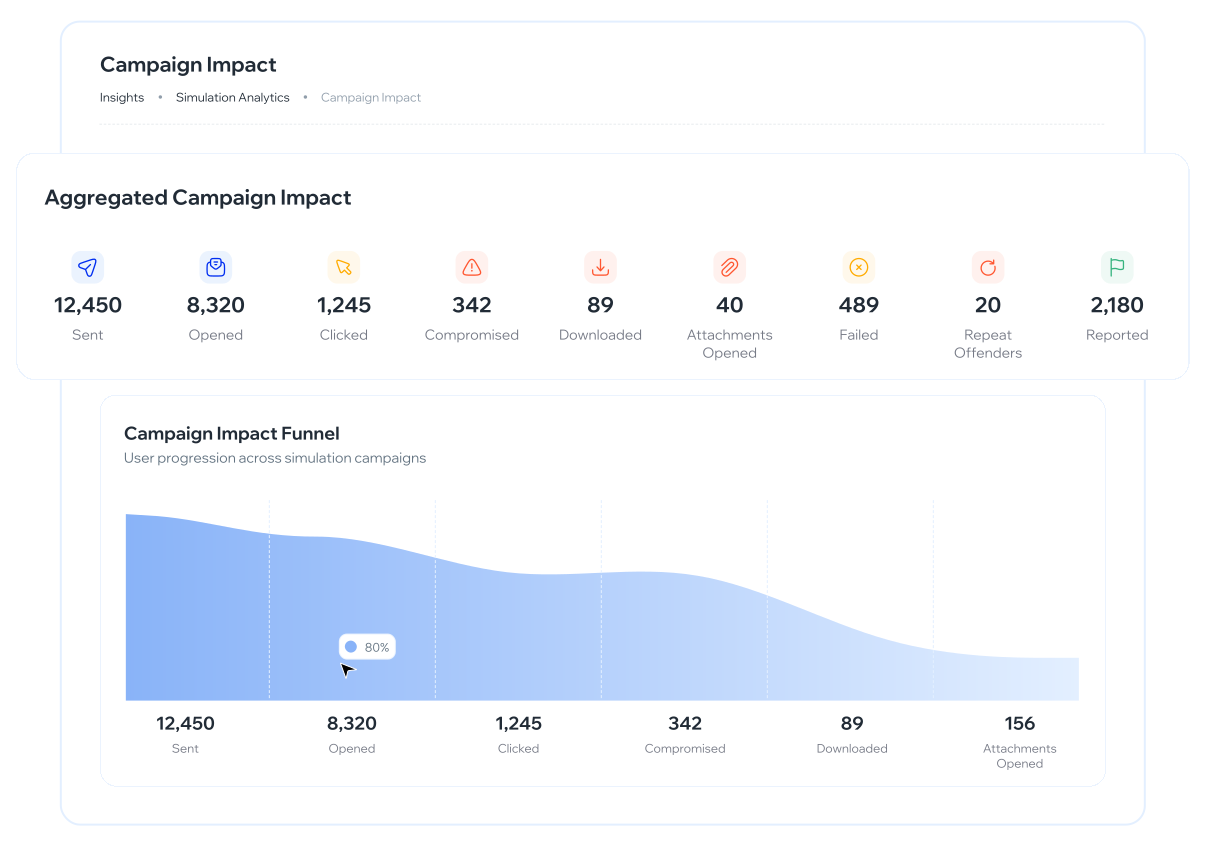
Three pillars of a program that works
Difficulty advances based on each employee's detection level. Campaigns personalized by group maturity stage.
Risk management becomes an experience employees choose. Brief format, high dynamics, minimal friction.
Message, tone, and content adapted to each area: technical, leadership, and everything in between.
Human risk became part of daily work
Risk management stopped being an isolated obligation. Gamification and personalization achieved real adoption that the previous program never reached. The next step: measuring risk by area and profile with adaptive Learning Paths.
What Whalemate gives us today is campaign customization adapted to what NaranjaX needs and our level of maturity. We value that greatly.

Want a program like this for your organization?
We'll show you how Whalemate can adapt to your context.
Personalization by maturity, not a blast to 3,000 people
Beyond NaranjaX’s result, there is an approach another organization can adopt: segmenting by maturity instead of sending the same thing to everyone.
The reusable lesson is the move from a generic program to one that recognizes maturity by audience. Simulations that raise difficulty when the group already detects. Content and tone that differ for technical staff, leadership, and the middle. Short mechanics — trivias, gamification — so the habit does not depend on a long course. If your organization has a large roster and a technical culture, copy that segmentation criterion; the result depends on your starting point.
What you do not replicate is “being NaranjaX.” Size, stack, and prior history are theirs. What a similar implementation does ask for: a program owner who wants to personalize, an IdP that can cut audiences, and the agreement that success is not a single monthly email. The next step they declare — measuring by area with adaptive paths — is a horizon, not a KPI you inherit.